

This guide is part of our Technical SEO services hub.
You know how frustrating it is to publish great content and see zero movement in organic traffic. That stagnation often happens because of invisible structural flaws hidden deep in your website code.
Since our founder Adam Yong established Adam SEO in 2011, we have operated on a simple truth: search engine rankings are meaningless without tangible business results.
So, what is a technical seo audit?
We will break down this diagnostic process by covering:
- The core elements evaluated by search engines.
- The hidden errors that drain your crawl budget.
- The exact steps needed to repair your foundation.
The diagnosis before the treatment
A technical SEO audit is a thorough examination of how search engines experience your website. It finds the problems that prevent your pages from being crawled, indexed, rendered, and ranked.
Just as a doctor diagnoses before prescribing, we audit before we act. This approach ensures the work targets what is actually holding your Malaysian business back.
We know that smartphone penetration in Malaysia exceeds 90 percent. Mobile-first indexing is a strict requirement for local visibility. If your site structure fails on a mobile device, search engines will simply ignore your content.
The Cost of a Broken Foundation
Our team routinely sees e-commerce stores lose thousands of ringgit because a simple code error blocks search bots from their checkout pages. Finding these hidden ceilings on your visibility is the entire purpose of this checkup.
Many local companies pour money into digital ads while neglecting their technical base. A recent industry study from NAV43 revealed that sites with serious technical flaws experience up to 30 percent less organic traffic than their well-optimised competitors.
What an audit checks
A complete technical SEO audit examines the structural health of your site, checking elements like crawlability, indexation, and speed. It evaluates the exact signals Google uses to determine if your website is trustworthy and user-friendly.
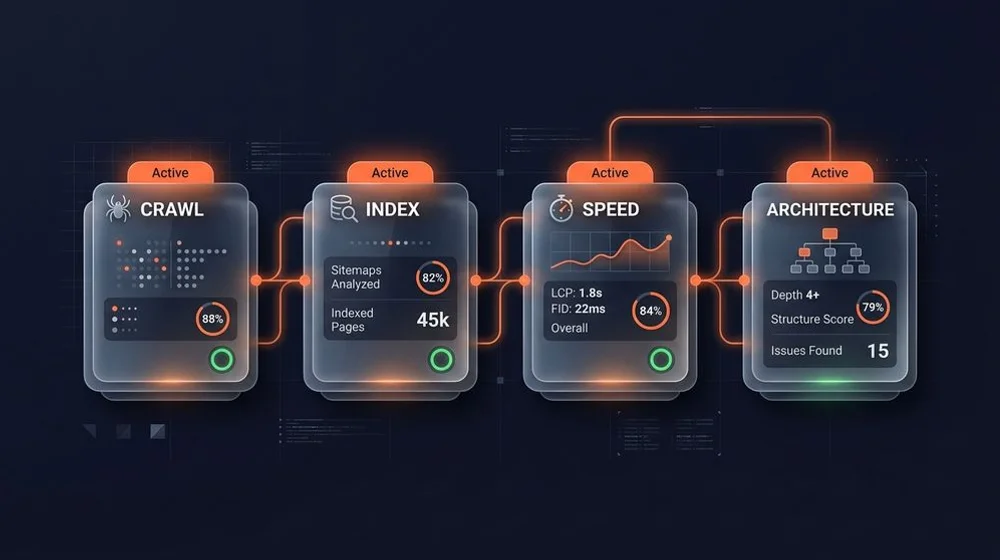
We review dozens of specific technical factors during this process. The core focus areas include:
- Crawlability: Can search engines reach all your important pages? We check your site architecture and internal linking to ensure bots don’t get trapped in endless loops.
- Indexation: Are the right pages indexed, and the wrong ones kept out? A common mistake is accidentally leaving a “noindex” tag on a high-value product page.
- Site speed and Core Web Vitals: Does the site load fast enough to rank and convert? See Core Web Vitals explained.
- Canonical and robots directives: Are these files telling search engines the correct rules? We ensure your
robots.txtfile allows access to essential content while blocking duplicate pages. - Sitemaps and redirects: Are your XML sitemaps accurate, and are there redirect chains slowing down the user journey?
- Site architecture: Is the folder structure logical, and does your internal linking distribute page authority effectively?
The problems it commonly surfaces
We regularly find pages blocked from indexing by mistake, broken or looping redirects, and duplicate content diluting rankings. These invisible issues quietly cost a business significant visibility and revenue.
Our analysts see the same specific technical errors crop up repeatedly for local SMEs and regional brands. A poorly optimised faceted navigation system is the top technical issue for online stores. This setup creates thousands of duplicate category pages, wasting your crawl budget and confusing search engines.
We also find that outdated speed metrics destroy conversion rates. While the median mobile download speed in Malaysia reached 143.56 Mbps in early 2026, a heavy, unoptimised website will still load slowly. Google data confirms that reducing page load time from three seconds to one second can improve your conversion rates by up to 27 percent.
Common Technical Failures
The table below outlines the most frequent issues discovered during a technical seo audit and their direct business impact.
| Technical Issue | Common Cause | Business Impact |
|---|---|---|
| Crawl Budget Waste | Faceted navigation creating endless URL parameters. | Search engines abandon your site before indexing new products. |
| High INP Scores | Heavy JavaScript blocking the main thread. | Users experience lag when clicking buttons, leading to cart abandonment. |
| Redirect Chains | Old HTTP pages redirecting multiple times to reach HTTPS. | Significant loss of link equity and frustratingly slow load times. |
| Expired Product 404s | Deleting out-of-stock items without implementing a 301 redirect. | Lost backlink value and a poor experience for returning customers. |
Why it comes first
You can’t build a content or link strategy on a foundation search engines can’t crawl. Fixing technical issues first means everything you do afterward compounds on solid ground rather than fighting a broken base.
We always prioritise this diagnostic phase because it offers the highest return on investment. Google officially shifted its primary responsiveness metric to Interaction to Next Paint (INP), heavily penalising jumpy or delayed page reactions. Fixing these specific delays by just 100 milliseconds can increase retail conversion rates by 7 percent.
Our technical audits frequently reveal the fastest wins for a campaign. Removing a single rogue line of code in a robots.txt file can instantly restore access to hundreds of valuable pages. This immediate boost in organic traffic provides a clear, measurable result before any new content is even written.
The Fastest Technical Wins
We often secure immediate traffic improvements by addressing these low-hanging fruits:
- Updating broken canonical tags.
- Compressing massive image files to modern WebP or AVIF formats.
- Fixing broken internal links to restore lost page authority.
Not all audits are equal
There’s a big difference between a genuine manual audit and an automated tool report. We cover the specific details of this distinction in manual versus automated SEO audits, but the short answer is that software misses the necessary context. An automated platform simply can’t understand your commercial priorities.
Our process begins with industry-standard crawlers to gather raw data. These programs are excellent at flagging hundreds of minor warnings across your site. Yet, they lack the ability to prioritise those warnings based on your specific business goals.
We rely on human specialists to review the data and filter out the noise. An automated report might assign a critical error rating to an orphaned page that you intentionally hid from the navigation. A human expert understands your strategy, ignoring the false alarms and focusing strictly on the SEO audit findings that impact your bottom line.
Tool Reports vs. Human Expertise
- Automated Tools: Flag every single missing alt text as a critical error, regardless of the page’s value.
- Human Experts: Prioritise fixes on your highest-converting product pages first to maximise immediate revenue.
- Automated Tools: Provide generic, one-size-fits-all recommendations.
- Human Experts: Align technical fixes with your specific Malaysian market strategy and local hosting setup.
Find what is holding you back
A proper technical SEO audit turns guesswork into a clear, prioritised plan for growth. With the technical SEO audit explained, you now know that a stable foundation is required to capture traffic and convert visitors effectively.
We provide actionable insights that directly improve your bottom line. To see what is capping your site’s visibility, Adam SEO offers a free discovery audit with no obligation.
Start building a stronger foundation today.