

We know the shift to AI-driven search makes entity based seo brand mentions a top priority for Malaysian businesses. A 2025 AWS report revealed that 2.4 million local companies now use AI, but 73% remain stuck on basic efficiency tasks instead of strategic growth.
Our team at Adam SEO, founded in 2011 by SEO veteran Adam Yong, has always believed that search metrics only matter if they drive tangible business revenue. The real opportunity today lies in optimising for artificial intelligence recommendations.
To capture this market share, you must understand the fundamental difference in modern search:
- Traditional search: Scans for exact-match keyword strings.
- Generative AI search: Looks for verified, trusted business entities.
We built this guide as part of our AI Search Optimization services hub, and it works perfectly alongside schema markup for AI search. Entity-based SEO is the strategy that puts you in front of these new generative engines.
Our goal is to help you transform your brand from a collection of web pages into a trusted digital asset.
Let us look at the data, what it actually tells us, and then explore a few practical ways to respond.
From keywords to entities
Entity-based SEO moves away from exact-match phrases to focus on real-world concepts like specific people, companies, and locations. AI engines require your brand to be a verified entity before they will confidently recommend you to users.
We have tracked a massive shift in how these systems process information. Google’s Knowledge Graph expanded rapidly, and by 2026 it was handling over 800 billion facts about 8 billion entities globally.
“A string of matching words is no longer enough to build real trust; search engines need to recognise your business as a concrete, factual entity.”
Traditional SEO treated words as disconnected strings of text. Our clients often ask why those old keyword strategies no longer dominate the search results.
The answer is that modern systems look for contextual meaning and relationships. A simple string of matching text on a page is no longer enough to build real algorithmic trust.
What makes a brand an entity
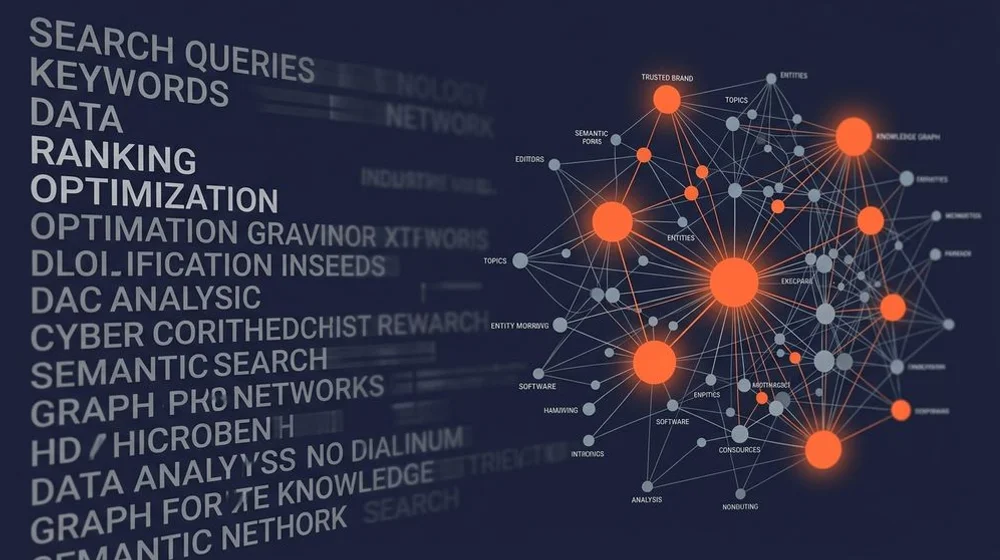
A brand becomes an entity when the web consistently describes its core details in the same way across multiple trusted platforms. These consistent signals allow algorithms to form a structured, confident understanding of your company profile.
We see three primary pillars that establish this digital identity. The foundation relies on a combination of technical code, off-page references, and profile uniformity.
Local brick-and-mortar stores and regional SMEs must pay special attention to these foundational elements:
- Knowledge-graph presence: Search engines hold a structured, verified understanding of your brand details.
- Consistent digital identity: Your name, physical address, and service descriptions match perfectly across directories and social profiles.
- Organization schema: This structured data explicitly tells machines who you are and what you do.
- Verified external validation: Reputable regional news outlets or industry directories cite your business as a factual source.
Our technical teams rely heavily on precise coding to kickstart this process. You can see the exact implementation steps in our guide on schema markup for AI search.
This explicit markup is the clearest way to introduce your business to a search engine algorithm.
The power of entity based SEO brand mentions
An unlinked brand mention occurs when a website names your company without providing a direct hyperlink back to your site. These text-based references act as powerful votes of confidence, proving to AI engines that your business is actively discussed in the real world.
We recently reviewed a 2026 AI visibility study by Niteco that completely changed how many view this tactic. The research found that brand mentions have a high 0.664 correlation with AI visibility, while traditional backlinks only score 0.218.
Being talked about now carries significantly more weight than simply being linked to. Our experts use this data to pivot strategies away from purely technical link-building.
Search Engine Land reported in May 2026 that approximately 85% of brand mentions in AI search originate from external domains, not the brand’s own website. A strong presence on third-party forums, local Malaysian directories, and news portals is absolutely essential.
| Metric | Traditional Backlinks | Unlinked Brand Mentions |
|---|---|---|
| AI Visibility Correlation | 0.218 (Low) | 0.664 (High) |
| Primary Value | Direct referral traffic | Algorithmic entity validation |
| Source Dependency | Owned and operated sites | 85% from external domains |
We encourage enterprise-level businesses to monitor these external conversations closely. The more your name appears in trustworthy contexts, the faster an algorithm will recommend your services.
This consistent exposure builds an undeniable digital footprint.
Why consistency across the web matters
Consistency matters because conflicting names, addresses, or product details confuse AI algorithms and break their understanding of your entity. When search engines encounter mismatched data, they lose confidence and will skip over your business in favour of a clearer alternative.
Our experience shows that ambiguity is the biggest enemy of search engine visibility. Malaysia is currently the fastest-growing digital economy in Southeast Asia, projected to reach RM161 billion in gross merchandise value, and standing out in this crowded regional market requires absolute precision in your business listings.
We regularly audit e-commerce stores that lose valuable traffic due to slight variations in their company name across different platforms. A coherent profile builds immediate trust with automated systems.
Removing conflicting details ensures that machines can cite your facts without hesitation.
Common consistency mistakes to avoid
We often spot the same recurring errors during our initial client reviews. These small discrepancies can severely damage your local authority:
- Mismatched trading names: Using “Sdn Bhd” on your website but leaving it off your Google Business Profile.
- Outdated operational hours: Failing to update public holiday hours across all regional directories.
- Inconsistent currency formatting: Displaying RM on one page and MYR on another, confusing financial data scrapers.
- Fragmented service descriptions: Highlighting different core products on social media compared to your main website.
Our recommendation is to create a single master document containing all official company details. Every team member should use this exact file when updating external platforms.
How this drives AI recommendations
AI recommendations are driven by a combination of entity authority, factual consistency, and verified presence in large language models. When a user asks a chatbot for a local supplier, the system draws exclusively from the pool of brands it recognises as credible entities.
We have observed a major shift in buyer behaviour across the Malaysian corporate landscape.
“According to G2’s 2025 Buyer Behavior Report, nearly 29% of buyers now turn to AI-powered search tools more frequently than traditional Google searches.”
Decisions about your products are happening inside chat environments before a customer ever visits your homepage. Our recent analysis of industry trends highlights the massive financial impact of these citations.
Research from Seer Interactive indicates that brands cited in AI Overviews earn 35% more organic clicks than those left out of the AI response. Entity authority transforms your business from an unknown name into a highly recommended regional leader.
We design campaigns that specifically target these conversational search patterns. Citable content and detailed schema markup are the tools that secure your place in these highly visible answers.
Build authority that AI rewards
Building AI authority requires a sustained commitment to accurate digital PR, structured data, and widespread presence. Early adopters who treat entity based seo brand mentions as a long-term investment will gain a lasting competitive edge in their market.
We know that securing these algorithmic recommendations takes time and careful planning. The compounding nature of entity signals means that the work you do today will protect your visibility tomorrow.
To start building this authority, focus on three immediate actions:
- Audit your current brand mentions across external directories.
- Standardise your company details on all local platforms.
- Implement detailed schema markup on your main website.
Leaving your digital footprint to chance is no longer a viable business strategy. Our team at Adam SEO offers a comprehensive discovery audit to evaluate how recognisable your brand is to modern algorithms.
You can claim this free, no-obligation review to identify your current gaps and opportunities. Let us help you turn your technical data into a compelling, AI-ready business profile.